NR Eye Clinic
Shop no 2, Shree Ganga Empire, Limbodi Main Road, Khandwa Rd, behind Queens College
Call Us
+91-9644145565
Mail Us
nreyeclinic@gmail.com
Computerised Eye Check-up in Indore
Home » Treatments » Computerised Eye Check-up
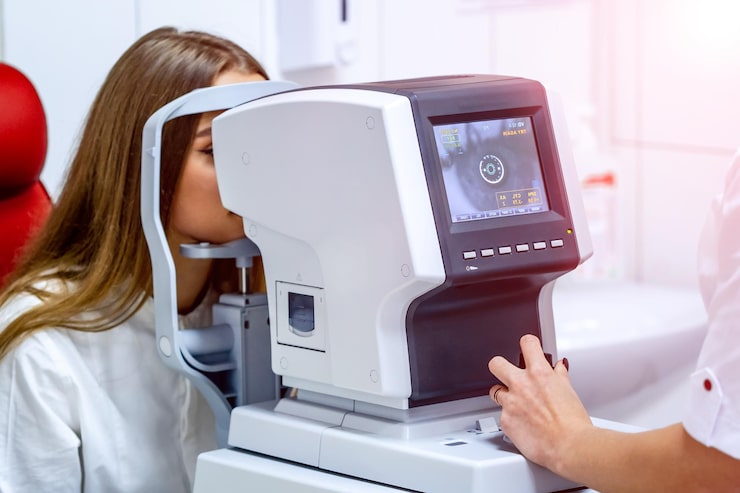
Computerised Eye Check-Up in Indore
Most people only get their eyes tested when something feels wrong, yet many eye conditions give no warning until vision has already been affected. A computerised eye check-up uses digital instruments to measure how your eyes focus, how healthy their internal structures are, and whether anything needs attention. Because the instruments record exact values instead of relying only on your responses, the results are objective and easy to compare from one visit to the next.
What Is a Computerised Eye Check-Up?
It is a structured eye examination in which automated devices capture measurements of your eyes in seconds. These readings are then checked and interpreted by the doctor, who confirms them with hands-on testing. The machines supply the data, but the clinical judgement still comes from the doctor. The combination reduces guesswork and gives a fuller picture than a basic chart reading alone.
How It Differs from a Routine Eye Test
- Objective measurements: Devices record the eye’s focusing error without depending on your answers, which is especially useful for children and anxious patients.
- Wider coverage: Eye pressure, corneal shape, and internal eye health are checked in the same visit as your prescription.
- Documented results: Readings can be stored and compared over time to spot slow changes.
- Speed: The automated stage takes only a few minutes per eye.
Who Should Consider This Check-Up?
- People who spend long hours on computers or phones
- Anyone with blurred or fluctuating vision
- Those with frequent headaches or tired eyes
- People whose glasses seem to need changing often
- Individuals with diabetes or high blood pressure
- Anyone with a family history of glaucoma, cataract, or retinal disease
- Adults above 40, when reading difficulty and pressure-related risks rise
- Children who sit too close to the screen, squint, or struggle to read the board
Symptoms Worth Checking
- Blurred, hazy, or changing vision
- Eye strain and burning after screen use
- Headaches around the forehead or temples
- Difficulty focusing between near and far
- Glare or poor vision while driving at night
- Watering, redness, or dryness
- Squeezing the eyes to see clearly
What the Check-Up Can Detect
- Myopia, hypermetropia, and astigmatism: The common focusing errors behind blurred vision
- Presbyopia: Age-related difficulty with near work
- Raised eye pressure: A key risk factor for glaucoma
- Corneal irregularities: Useful before contact lenses or refractive surgery
- Early cataract changes: Clouding of the lens
- Retinal and optic nerve changes: Signs that may call for further tests
- Dry eye and surface problems: Common in heavy screen users
What Happens During the Examination
- Brief history: Your symptoms, screen habits, medical history, and any medicines are noted.
- Auto-refraction and keratometry: A device estimates your spectacle power and the curvature of your cornea.
- Eye pressure measurement: A gentle, quick test screens for glaucoma risk.
- Visual acuity and subjective refinement: The doctor fine-tunes the prescription by asking which lenses look clearer.
- Slit-lamp examination: The front of the eye is examined under magnification.
- Retina and optic nerve evaluation: Dilating drops are used when needed for a clear view.
- Explanation and advice: Findings, prescription, and any follow-up are discussed in plain language.
The whole visit is painless. If dilating drops are used, expect blurred near vision and light sensitivity for a few hours, so bring sunglasses.
Preparing for Your Visit
- Bring your current glasses or contact lens details
- Carry earlier prescriptions and reports, especially if you have diabetes or glaucoma
- Make a list of the medicines you use
- Remove contact lenses beforehand if advised
- Note any symptoms and when they occur
- Arrange company if you expect to be dilated
How Often Should You Be Tested?
Children and young adults without symptoms may be reviewed every one to two years, or sooner if the school notices difficulty. Adults over 40 benefit from a yearly check-up. People with diabetes, high blood pressure, high myopia, or a family history of eye disease should follow the schedule their doctor advises, often once a year or more frequently.
Looking After Your Eyes Between Visits
- Take regular screen breaks, looking at something distant every 20 minutes
- Keep lighting comfortable and reduce screen glare
- Blink often to keep the eye surface moist
- Wear UV-protective sunglasses outdoors
- Avoid using eye drops without advice
- Keep diabetes and blood pressure well controlled
Seeing the Doctor Behind the Machines
Technology is only useful when someone interprets it carefully. At NR Eye Clinic, Dr. Amitesh Satsangi, an ophthalmologist in Indore, reviews each reading in the context of your symptoms, age, and medical history. A slightly raised pressure or an unusual corneal reading does not always mean disease, and the doctor decides whether it needs monitoring or treatment. Where a problem such as cataract or glaucoma is found, an eye surgeon in Indore can plan the next step with you without sending you elsewhere.
Book Your Check-Up
If you have not had your eyes examined recently, or if you notice any change in your vision, a computerised eye check-up is a simple way to find out where you stand. Consulting an eye doctor in Indore early can prevent small problems from becoming serious ones.
📞 Call: +91-9644145565
Dr. Amitesh Satsangi, NR Eye Clinic
Call Us
+91-9644145565
Mail Us
nreyeclinic@gmail.com
NR Eye Clinic
Shop no 2, Shree Ganga Empire, Limbodi Main Road, Khandwa Rd, behind Queens College, Indore, Madhya Pradesh – 452020